


Overview
Executive Summary
WHO THIS IS FOR
Primary audience: CIOs, Heads of AI, and Chief Digital Officers evaluating how to scale enterprise AI beyond pilots.
Secondary audience: CX, contact center, and digital engagement leaders working with IT to operationalize AI in customer-facing workflows.
Enterprise AI is moving from experimentation to execution — but most organizations are
stuck in the pilot-to-platform gap.
After two years of GenAI investment, the typical enterprise has 40–60 disconnected AI projects, three or four overlapping copilots, and no unified picture of what is actually in production. Context is lost between channels. Each new use case starts from zero. Governance gets reconstructed in every team. The question buyers are now asking out loud: how do we get out of the portfolio-of-projects mode and run AI as a single operating layer?
Ephanti was built for that question. The platform combines a context-aware AI engine (MEVA), a configurable multiagent orchestration layer using a modern agent framework with zero-shot routing patterns, and a packaged solution library spanning customer engagement, sales, support, and operations. The result: enterprises deploy in 30–60 days, preserve context across SMS, WhatsApp, email, chat, social, and voice, and govern AI from a single control plane.
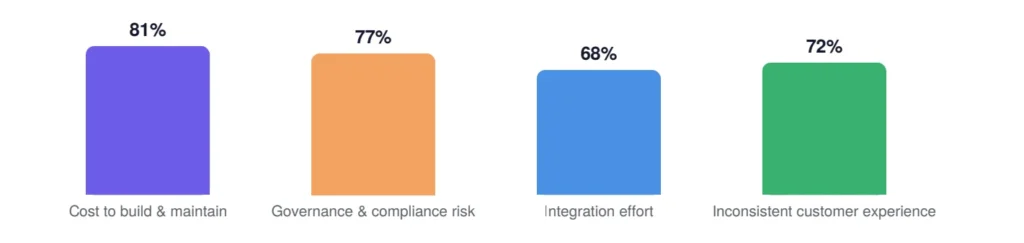
Exhibit 1: Where fragmentation creates pressure (enterprise survey signals)
Core thesis
More isolated tools will not get the enterprise where it needs to go. Neither will another foundation model. What moves the needle is packaged, agentic solutions that share context across channels and sit on a governed platform — solutions that ship configured for a real vertical workflow, not as a blank canvas the customer has to fill in.
What Ephanti delivers, specifically
MEVA context engine
A context-aware AI layer that maintains entity, intent, and conversation state across channels and systems — not just prompt-level memory.
Multi-agent orchestration
Configurable orchestrator-plusspecialist pattern (e.g., Product Discovery + Order + Service agents) on a node-based flow designer.
Packaged vertical solutions
Pre-built for retail, hospitality, nonprofits, technology, and manufacturing — with reusable knowledge bases and integration accelerators.
Fragmented Intelligence
Part 01: The Limitations of Fragmented AI
Most enterprises started with tactical AI deployments: a chatbot for support, a voice assistant for one service line, an automation bot for internal operations, or a model embedded inside a functional workflow. These systems can create value in isolation, but they rarely compound value across the enterprise.
For the CIO and Head of AI, fragmentation is no longer a theoretical concern — it shows up as a budget line. Each new use case requires its own integration project, its own data plumbing, its own governance review, and its own team to babysit it in production. As adoption expands, four failure modes appear: context is lost across channels, workflows require repeated integration work, teams duplicate models and infrastructure, and governance becomes inconsistent. The result is not enterprise intelligence — it is disjointed intelligence.
Exhibit 2: The Ephanti AI Maturity Model
Point Intelligence
Task-specific AI. Limited reuse. Each team owns a model. Governance is local and opaque.
Connected Intelligence
Partial integration across a few systems. Workflow gains in pockets. Still channel-bound.
Unified Intelligence
Platform-led. Context shared across channels and agents. Governance enforced centrally.
| Dimension | Fragmented AI (typical state) | Unified Omnichannel AI (Ephanti) |
|---|---|---|
| Customer context | Lost between chat, voice, email, and apps | Persistent and shared across touchpoints via MEVA |
| Experience | Inconsistent by channel or department | Seamless, continuous, and personalized |
| Integration | Custom connectors and brittle handoffs | Platform-based orchestration with reusable connectors to CRM, ERP, ITSM, PMS |
| Governance | Point-in-time controls, limited auditability | Central guardrails, monitoring, and policy enforcement (SOC 2 attested) |
| Time to value | Long cycles for each new use case (6–12 months) | 30–60 days through packaged solutions |
“I’ve been trying to work with you people, but nobody knows what I told the last person. Do you actually want my business?”
— Enterprise prospect to a 20-person SaaS company before consolidation. The contract was lost. (See Case Study, page 7.)
Packaged solutions
Part 02: From Custom Builds to Packaged
Solutions
Custom AI programs often begin with good intent: tailor every use case, optimize every workflow, integrate every system independently. But the pattern becomes expensive — each new use case becomes its own snowflake to discover, design, integrate, test, and maintain. (If you have ever tried to fit your full AI landscape on a single slide for a board update, you have felt this pain.)
Packaged solutions change the economics. They combine reusable solution logic, pre-defined workflows, agent patterns, integration accelerators, and governance defaults. Enterprises still configure for their operating model — they no longer start from a blank page.
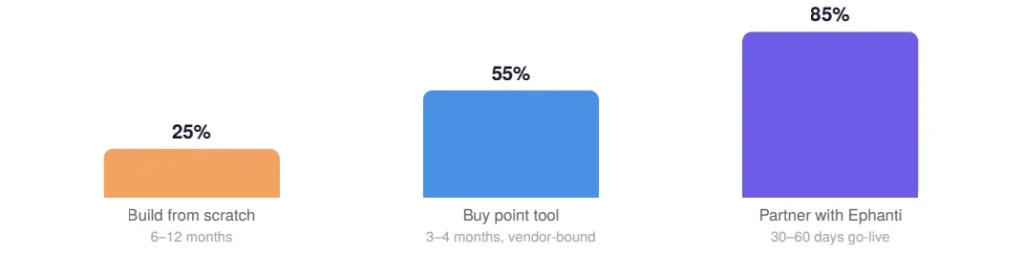
Exhibit 3: Expected time-to-value, by approach
| Dimension | Custom Build | Ephanti Packaged Solution |
|---|---|---|
| Deployment model | Project-led, bespoke per use case | Productized and configurable per vertical |
| Time to deploy | Often 6–12 months | 30–60 days for first use case |
| Reusability | Limited by use case | Reusable agents, flows, KBs, integrations |
| Scalability | Requires new engineering each time | Built into platform architecture |
| Consistency | Variable by team and project | Standardized experience and governance |
Packaged does not mean rigid — what's actually packaged
Most “packaged AI” pitches collapse under scrutiny because the buyer can’t see what is reusable versus what still has to be built. Ephanti’s packaging is concrete:
Reusable agent patterns
Orchestrator + specialist agents (Product Discovery, Order, Service) — proven across retail, hospitality, and nonprofits
Pre-built knowledge bases
Vertical KBs ready for ingestion — retail catalogs, hospitality booking attributes, donor lifecycle taxonomies.
Integration accelerators
Pre-tested connectors for CRM, ERP, ITSM, PMS, plus messaging APIs (WhatsApp Business, SMS, Apple Messages).
Configuration, not coding
A node-based flow designer lets enterprise teams adapt workflows without touching the model layer.
Platform
Part 03: The Ephanti Omnichannel Agentic
Platform
Ephanti provides the flexible omnichannel agentic platform underneath its packaged solutions. The platform connects channels, agents, enterprise systems, and governance into a single operating layer. For technology buyers, the architecture below is what determines whether AI scales or plateaus after the first deployment.
Exhibit 4: Ephanti unified intelligence architecture
Channel Layer
SMS · WhatsApp Business · Email · Web Chat · Voice · Apple Business Messages · Instagram, Facebook, X DMs
Agent Layer
Specialist agents (Product Discovery, Order, Service, Campaign, Marketing Co-Pilot, Inbox Assistant) plus a configurable Orchestrator
Orchestration Layer
Modern agent framework · zero-shot routing · multi-agent coordination · node-based flow designer · MEVA context engine for cross-turn state
Integration Layer
CRM (HubSpot, Salesforce) · ERP · ITSM · PMS · KB ingestion · Database filter generator (natural language → structured query) · APIs
Governance Layer
SOC 2 Type I attested · multi-tenant isolation · auditability · policy controls · monitoring · PII handling · prompt & response governance
What's actually different — beyond the buzzwords
1. MEVA is a context engine, not just memory
Unlike prompt-stuffing or RAG-only approaches, MEVA maintains entity-level state (customer, order, ticket, donor) that persists across channels and agents. When a guest asks about a suite upgrade on WhatsApp after browsing on web, the agent inherits the full context — not a summary. Omnichannel context becomes a measurable property, not marketing copy.
Cross-channel state · entity resolution · session continuity · multi-turn intent tracking
2. Orchestration is configurable, not hard-coded
Ephanti decomposes monolithic agents into specialists coordinated by an Orchestrator (e.g., for retail: Product Discovery → Order → Service). Routing rules, tool access, and contact verification logic are exposed as configuration — adapt the agent topology without re-prompting from scratch.
Multi-agent topology · explicit handoff rules · guest vs. existing branches · fallbacks
3. Governance primitives are first-class
Instead of bolting governance on after deployment, Ephanti ships with multi-tenant isolation, audit trails, and policy controls. SOC 2 Type I attested. PII redaction and prompt-response governance are platform features — not add-ons each customer reimplements.
SOC 2 Type I · multi-tenant isolation · audit log · policy enforcement · PII handling
Strategic Choice
Part 04: Build, Buy, or Partner
As enterprises scale AI, the strategic question is no longer simply build or buy. A third model — partner — has become essential. Building gives control but is slow and resource-intensive. Buying gives speed but creates rigid silos and vendor lock-in. Partnering with Ephanti combines packaged acceleration with platform flexibility and implementation depth.
| Dimension | Build | Buy | Partner with Ephanti |
|---|---|---|---|
| Time to value | Slow (6–12 mo) | Moderate (3–4 mo) | Fast (30–60 days) |
| Customization | High, but expensive | Limited by product design | Configurable solution core |
| Upfront investment | High | Moderate | Optimized |
| Integration burden | Enterprise-owned | Often constrained | Shared and accelerated |
| Scalability | Complex to standardize | Vendor-dependent | Platform-driven |
| Innovation model | Internal burden | Vendor roadmap | Co-created roadmap |
Who is making this decision — and what each persona needs
Different stakeholders read this paper through different lenses. Here is what we hear most often.
primary buyer
CIO / Head of AI / CDO
Owns the build/buy/partner decision. In most board meetings now, AI is a standing agenda item rather than a quarterly curiosity — and the questions are getting harder. Wants to consolidate AI sprawl, demonstrate measurable value, and avoid governance landmines. Cares about: architecture fit, multi-tenant security, integration depth, total cost over 3 years, vendor stability.
influencing buyer
VP CX / Head of Contact Center
Owns the day-to-day customer experience and agent productivity. Cares about: response time, deflection rate, agent assist quality, channel coverage, and how quickly a new conversational flow can ship without an engineering ticket.
primary buyer
VP Marketing / Demand Gen
Owns campaign velocity and lead-to-revenue conversion. Cares about: speed-to-respond on inbound, multi-channel campaign orchestration, and unified attribution across SMS, WhatsApp, social, and email.
influencing buyer
CISO / Compliance Lead
Gates the procurement decision. Cares about: SOC 2 attestation, data residency, PII handling, audit trail, and the platform's ability to enforce policy consistently across every agent and channel.
Proof points
Part 05: What This Looks Like in Production
The ideas above only matter if they translate to outcomes. Below are anonymized accounts from active Ephanti deployments — drawn from the case study library at ephanti.com/case-studies.
Hospitality · Heritage Resort
From 48-hour lead response to 3 minutes
Luxury heritage resort, Rajasthan · Instagram + WhatsApp + voice consolidation
A luxury heritage property was spending the equivalent of ₹12 lakhs/month on Instagram marketing — and watching most leads die before sales could call them. After deploying MEVA across Instagram DMs, comments, story replies, and WhatsApp Business — multilingual, trained on resort-specific knowledge — they collapsed the lead loop.
3 min
Avg response (from 48 hrs)
47%
Lead conversion (from 12%)
340%
ROI in first 90 days
Technology · Early-stage SaaS
From 8 marketing tools to 1 platform
20-person B2B software company · Mailchimp, HubSpot, WhatsApp, social DMs & agency collapse
A growing SaaS startup ran 8 separate tools in parallel — Mailchimp, native social apps, WhatsApp Business, HubSpot, Apple Business Messages, and a third-party agency. Reps lost 2–3 hours daily reconstructing customer history. Consolidating onto Ephanti gave the team a single inbox, automatic CRM sync, and MEVA-driven first-response on every channel.
8 → 1
Tools consolidated to platform
2–3 hrs
Daily time recovered per rep
1 quarter
To significant operational ROI
Non-profit · International NGO
AI-powered constituent services across four countries
International NGO, education & healthcare · Southeast Asia and Latin America
A well-established NGO running programs across four countries needed to scale constituent communications without scaling staff. MEVA handled multilingual donor and beneficiary engagement — escalating to relationship managers when a personal touch was needed.
4
Countries on one platform
24/7
Multilingual donor coverage
↑
Retention & staff capacity
Exhibit 5: Aggregate benchmarks across Ephanti deployments
30–60
days to go-live with MEVA integrations
40%
lower operating cost via automation
3–5×
higher engagement across channels
150%+
productivity gains in CRM & ERP
Data Readiness
Part 06: Data as the Foundation
Enterprise AI does not succeed on model capability alone. It depends on the quality, availability, and safety of the data that powers each interaction and workflow. For the CIO, this is where most AI initiatives quietly stall — waiting for “data to be ready.” Ephanti treats data readiness as a practical operating discipline tied to outcomes, not a theoretical prerequisite.
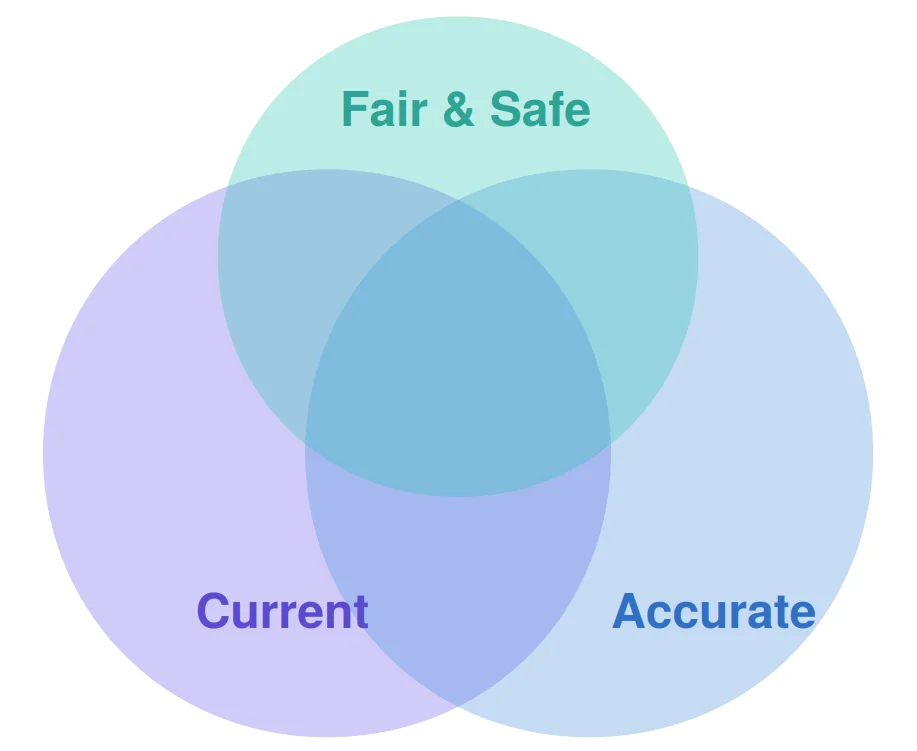
Exhibit 6: Ephanti Data Readiness Model
Current — accessible, up-to-date, and relevant to the workflow at hand.
Accurate — reliable, vetted, and grounded in business truth. Fair & Safe —
compliant, privacy-aware, and designed to minimize bias.
A use case is "data-ready" when it sits in the intersection — not when every data
source in the enterprise is perfect.
Pragmatic readiness, not endless perfection
Many enterprises delay AI programs because data is never considered fully ready. Ephanti helps organizations avoid this trap by tying readiness to specific packaged outcomes and iterating over time. The first deployment usually requires far less data than buyers expect — because packaged solutions arrive with their own knowledge structures, taxonomies, and grounding patterns. The goal is data that is sufficiently reliable for the use case, while continuously improving quality, governance, and coverage.
What this looks like in practice
For a direct-to-consumer e-commerce brand, MEVA needed only the existing Shopify catalog (SKUs, attributes, inventory), the order history in their CRM, and a small knowledge base of return and shipping policies to launch a product discovery agent in under five weeks — without a data warehouse project. Subsequent agents (cart recovery, post-purchase, loyalty) reused that foundation incrementally.
Deployment
Part 07: Implementation Roadmap
Ephanti uses a phased deployment model that moves enterprises from evaluation to deployment and then scale. The model is designed to reduce implementation risk while ensuring that each packaged solution is aligned to measurable business outcomes. Most first deployments reach production in 30–60 days.
1
Evaluate
Identify use cases, channels, data sources, integration architecture, and value metrics. Typically 1–2 weeks. Output: a scoped first solution and a 90-day success plan.
2
Deploy
Configure the packaged solution, integrate with CRM/ERP/PMS, launch agents on selected channels, and establish governance. Typically 4–8 weeks to first live workflow.
3
Scale
Expand channels and use cases, reuse components across teams, optimize adoption, and monitor value. Each subsequent solution typically launches in half the time of the first.
Business impact, observed across deployments
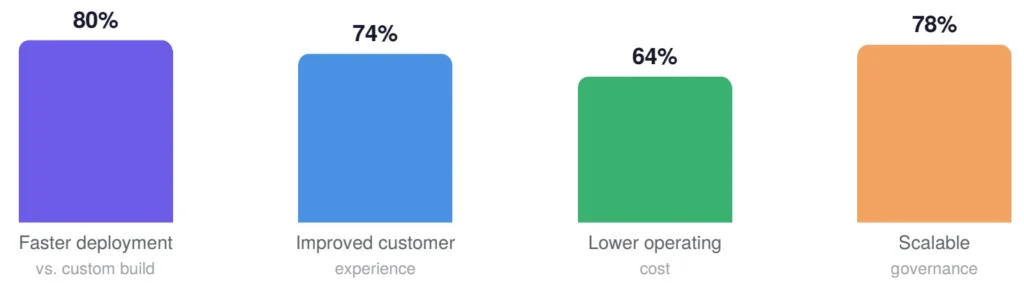
Exhibit 7: Expected enterprise outcomes (median across customer base)
What lower implementation risk actually means
Each deployment begins with a known-good solution pattern and pre-built governance defaults. For common systems of record, the integration is already tested. For less common ones, Ephanti's solution architects build and validate the connection during pre-implementation — using standard integration patterns where they fit and custom work where they don't. Either way, the customer's IT team co-designs alongside us, rather than being the first to figure it out.
Conclusion
From Fragmentation to Unified Intelligence
The next phase of enterprise AI will not be settled by which foundation model wins this quarter. It will be settled by something less glamorous: whether an organization can actually connect its AI work — across teams, across channels, across the systems of record that already run the business. That is the unglamorous part most pilots never cross.
For the CIO and Head of AI making the build/buy/partner call, the choice is becoming clearer. Building gives the most control but consumes the most time and the most expensive talent. Buying point tools accelerates the first use case but rebuilds the silos AI was supposed to eliminate — which is, frankly, how most enterprises end up with three copilots, two chatbot vendors, and a deck explaining why none of them talk to each other. Partnering with Ephanti delivers packaged outcomes on a flexible platform, preserving optionality while collapsing time-to-value from quarters to weeks.
Ephanti’s role is to help enterprises stop adding new tools to an already overloaded stack and start treating AI as shared infrastructure — context that follows the customer, agents that share what they have learned, governance that does not need to be reinvented each time a new use case ships. All without ripping out the systems already in place.
The Ephanti advantage
Packaged solutions, configurable agents, and a single governed platform across SMS, WhatsApp, email, chat, social, and voice. SOC 2 Type I attested, deployed in 30–60 days, in production today across hospitality, retail, technology, and non-profits.
About Ephanti
Ephanti is an AI-native customer engagement platform powered by MEVA, our context-aware AI engine. Ephanti unifies conversations across SMS, WhatsApp, email, chat, social, and voice — so marketing runs faster, sales closes sooner, and support delivers with empathy, in one connected flow. Headquartered with global delivery, Ephanti is SOC 2 Type I attested and serves customers across retail, hospitality, technology, manufacturing, and non-profit sectors.
Next step
For a working session on how a packaged Ephanti solution would map to your highest-priority workflow — and what time-to-value looks like for your environment — reach out at ephanti.com/contact-us or explore additional case studies at ephanti.com/case-studies.
